What my test bots found in Ragdoll Sled Mountain
Before anyone played my ragdoll sled game, bots played its first ten minutes on the real server code. They found three bugs that would have made new players quit. What changed, and what the numbers do not prove.
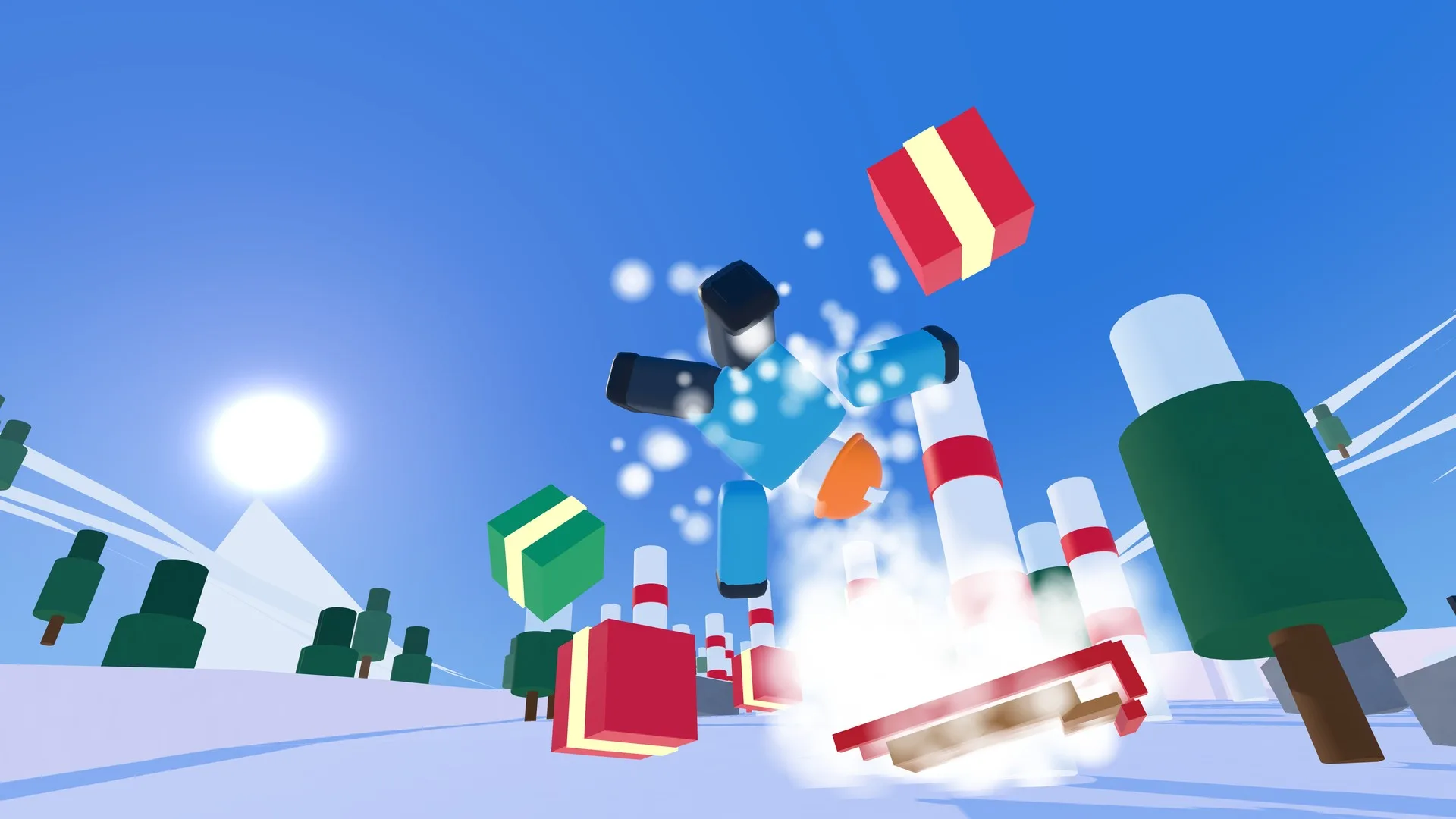
Ragdoll Sled Mountain had 0 players when I wrote this. The bots had already done hundreds of runs.
Before a single person tried the game, I let test bots play its first ten minutes on the real server code. They found three problems that would have made a new player quit. Here is what they were, what I changed, and what the numbers can and can’t tell you.
How the test works
The real server and the real client run together in one process, on a simulated clock. Messages go both ways with a tenth of a second of lag, each save or load takes 0.3 seconds, a character takes a second to load. Four scenarios: alone in a server, or with 3 other players (one of them a Roblox friend of the new player), on a phone with touch controls, or on a console with only a gamepad.
The new player is a bot, and it plays like someone who has never seen the game:
- it doesn’t read long text. 1.5 seconds after a screen appears, it taps the biggest button;
- it steers with a beginner driver that learns over its first runs;
- if a hint tells it to flip, it holds flip through the next jump;
- it taps any free CLAIM button it sees, and it never touches a Robux or ad button.
Every event is logged: a run starts, a run ends, coins come in, a goal changes, an upgrade is bought. Then I look for the moments where nothing happens for too long.
Bug 1: RUN AGAIN cancelled the run you just started
In the bots’ first ten minutes, 17 of 41 runs ended one second after they started, with a toast: “That run did not count: your rider respawned”.
The cause was on the server. After a crash, it schedules your trip back to the summit 6 seconds later. If you pressed RUN AGAIN in the last second of those 6 seconds, the game reloaded your rider for the new run. While that took a second, the scheduled trip back woke up, saw no active run, and loaded a second rider. That second rider replaced the one on your new run, and the run ended with no coins.
A real player hits this by pressing RUN AGAIN 2 to 3.5 seconds after the run summary opens. In other words, by doing exactly what the button asks.
The fix: a new run now cancels the trip back that is still waiting, and puts it back only if the run can’t start. 17 cancelled runs became 0. A server test that failed before the fix now passes.
Bug 2: the tutorial taught new players to crash
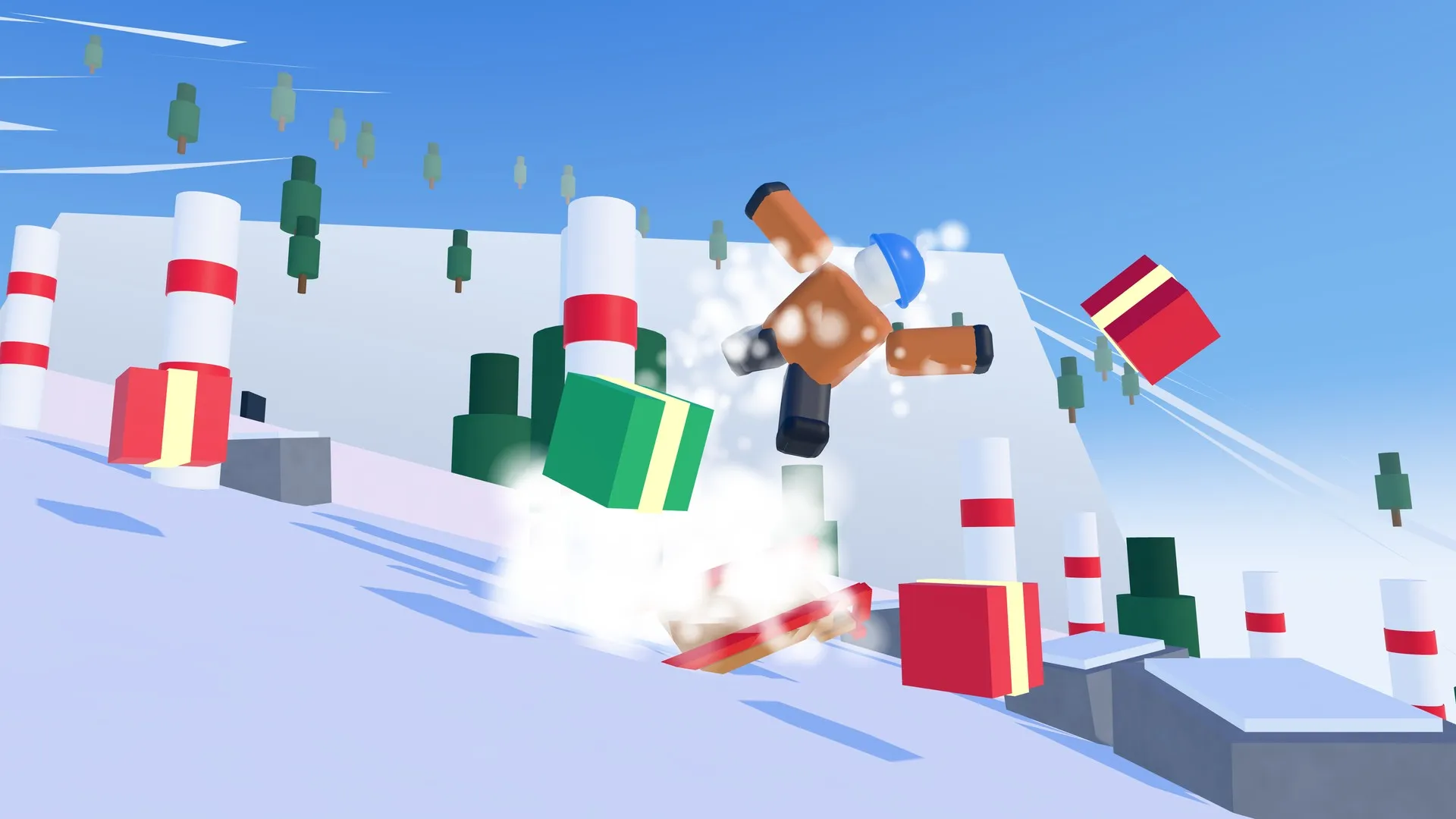
The hint “Hold FLIP in the air to flip” showed up right before the first ramp. But with the starter sled, a flip needs about one second of air, and that ramp gives about half a second. No ramp on Pine Slope, the first zone, gives a starter sled enough air.
So a player who did what the hint said wiped out at 45 meters, and got 57 coins instead of about 233.
The fix: the flip hint now only shows before a ramp where holding flip through the whole jump actually lands, with your sled as it is, until your first flip. The steering hint lasts 2.5 seconds at most and goes away as soon as you steer on your own.
Bug 3: a daily gift nobody claimed
A new player’s Day 1 gift, 500 coins, waited behind the REWARDS button, marked with a red dot. The bot never opened it, like a player who only taps the big buttons. So the daily streak never started, and those 500 coins were missing when it mattered.
The fix: while the gift is waiting, the run summary shows a free button, CLAIM DAY 1 GIFT: 500 COINS. After that, the same line says what comes tomorrow: a Day 2 gift of 1,000 coins and a new Daily Slope. The first upgrade bought with coins moved from 93 seconds to 25 seconds.
Two smaller changes
- Distance coins every 100 meters, like “+100 at 100 m”. Those are the coins that run was already paying, shown earlier. The longest stretch with nothing new on screen during a run went from 9.2 seconds to 6.7.
- A Roblox friend in your server now adds 10% to the coins of every run (inside the existing cap on coin bonuses), and the summary says “Riding with a friend: +10%” only when it really adds coins.
The number, and why it is not a player number
Each scenario gets a modeled drop off at 10 minutes. It is a model, the same one I use for all my games: every gap longer than 8 seconds between two engaging moments lowers the chance that a player is still there. Before the changes: 22%. After: 0%.
That 0% only means no gap is longer than 8 seconds. The model doesn’t see frustration. My beginner bot still crashes at the same spot, 178 meters down, on 17 of its 25 finished runs. And with the starter sled, nobody can flip on Pine Slope: the bot’s first flip comes after about 8.8 minutes, once it has bought its third Air upgrade.
Bots are not players. They tell you where people will probably quit. They don’t tell you what is fun.
What’s next
These fixes are live in the version of Ragdoll Sled Mountain that is public today. The real test is people, and so far nobody has played. Visits: 0. When real players show up, I’ll compare their first ten minutes with the bots’ and post both.
If you’re 16 or older with an age checked account, search Ragdoll Sled Mountain on Roblox, or start from the game page. It is in the 16+ trial for now. If you play it, I’d love to know where you would have quit.
The first devlog has all three games and the 16+ wall: I made 3 Roblox games in 6 days. Here are the real numbers.